




Skincare Ingredient Layering and Mixing Tips
Skincare Ingredient Layering: What Not to Mix and How to Build a Better Routine
When More Isn’t Always Better
With so many cleansers, toners, serums, exfoliants, retinoids, moisturizers, masks, and treatments available, it can be tempting to use several active skincare products at once. But when it comes to skincare, more isn’t necessarily better.
Some active ingredients can be irritating when layered together, while using too many products can overwhelm the skin and make it difficult to determine which products are actually helping.
Understanding which skincare ingredients not to mix, when to alternate powerful actives, and how to layer skincare products correctly can help you create a simpler, more effective routine.
Why Can Skincare Ingredients Clash?
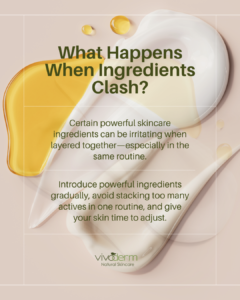
A skincare ingredient doesn’t necessarily have to be “bad” for your skin to cause a problem. Two effective ingredients may simply be too intense when used together, particularly for sensitive skin or when you’re introducing new actives.
Combining several exfoliating or high-strength ingredients in the same routine may contribute to:
- Redness and irritation
- Dryness or flaking
- Increased skin sensitivity
- Tightness or discomfort
- Disruption of the skin’s natural moisture barrier
Your individual skin type, the strength of the formula, how frequently you use a product, and what else is in your routine all matter.
Rather than thinking of every combination as strictly “forbidden,” consider whether your skin actually needs multiple powerful actives at the same time.
Skincare Ingredients to Use Carefully Together
Retinol + AHAs or BHAs
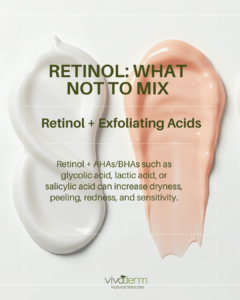
Retinol encourages skin cell turnover, while alpha hydroxy acids (AHAs) and beta hydroxy acids (BHAs) exfoliate the skin.
AHAs such as lactic acid and glycolic acid primarily work at the skin’s surface, while the BHA salicylic acid is commonly used in products designed for oily and acne-prone skin.
Each can be useful on its own, but layering retinol with strong exfoliating acids may be too aggressive for some skin types.
Better approach: Consider alternating them between different evenings rather than using everything in the same routine. Introduce new actives gradually and pay attention to how your skin responds.
 AHA + BHA + Multiple Exfoliating Acids
Using several exfoliating acids doesn’t necessarily mean you’ll get faster or better results.
Combining glycolic acid, lactic acid, salicylic acid, exfoliating toners, peels, and scrubs can result in over-exfoliation. Instead of smoother skin, you may end up with dryness, redness, irritation, or increased sensitivity.
Better approach: Choose an exfoliating product that addresses your skin’s needs and avoid stacking multiple exfoliants simply because they are available.
Retinol + Benzoyl Peroxide
Both ingredients are frequently found in acne and anti-aging routines, but using them together may be unnecessarily drying or irritating for some people. Depending on the formulations involved, benzoyl peroxide may also affect the stability of certain forms of retinoids.
Better approach: If you use both, consider separating them—for example, one in the morning and the other in the evening—or follow the directions provided with your specific products.
Vitamin C + Strong Acids
Vitamin C and exfoliating acids can both be valuable additions to a skincare routine. However, layering a potent Vitamin C formula with strong AHAs or BHAs may increase irritation, particularly for sensitive skin.
Better approach: Try using Vitamin C during your morning routine and exfoliating acids at night or on alternate days.
And remember: daily sunscreen is especially important when using ingredients that can increase sun sensitivity.
Can You Use Too Many Skincare Products?
Yes. Even when individual products are appropriate for your skin, a complicated routine can become too much.
Layering multiple serums, exfoliants, oils, creams, masks, and treatments may contribute to irritation, clogged pores, product buildup, or a heavy, congested feeling.
It can also make troubleshooting difficult. If your skin suddenly becomes irritated and you’ve introduced four new products, how do you know which one caused the reaction?
A better skincare routine isn’t necessarily the one with the most steps. It’s the one that gives your skin what it needs without unnecessary overload.
How to Layer Skincare Products Correctly

Once you’ve selected products that are appropriate for your skin, application order matters.
A helpful general rule is:
Apply products from thinnest to thickest, with sunscreen as the final step of your morning routine.
A basic routine may look like this:
1. Cleanser
Begin with a gentle cleanser to remove makeup, excess oil, dirt, and impurities.
2. Toner
Apply toner after cleansing to refresh and prepare the skin for the products that follow.
3. Serums and targeted treatments
Lighter, water-based products and targeted treatments are generally applied before heavier moisturizers.
4. Eye cream
Apply your eye treatment gently around the delicate eye area according to the product directions.
5. Moisturizer
Choose a moisturizer based on your skin type and current needs.
6. Sunscreen — daytime
Finish your morning routine with broad-spectrum sun protection.
Always check the directions for individual products, as certain treatments may require a different application order.
Keep Your Skincare Routine Balanced
A good skincare routine doesn’t have to be complicated.
For many people, the foundation is simply cleanse, hydrate, moisturize, and protect, with targeted treatments added when needed.
At Vivoderm Natural Skincare, you can build a routine around your individual skin type rather than adding unnecessary steps.
For example:
- Vivoderm Gentle Facial Cleanser – A gentle starting point for removing impurities without relying on harsh cleansing ingredients.
- Vivoderm Facial Toner with Grape Seed & Green Tea – An alcohol-free toner that helps refresh, hydrate, and prepare the skin for the next steps in your routine.
- Vivoderm Anti-Aging Daily Moisturizer – A lightweight, oil-free option for normal, sensitive, and combination skin.
- Vivoderm Intense Moisturizer – A richer moisturizing option for very dry, dehydrated, or mature skin.
- Vivoderm Zinc Repairing Facial Cream – A targeted option for oily, combination, and acne-prone skin.
- Vivoderm Anti-Wrinkle Eye Cream – Provides moisturizing care specifically for the delicate eye area.
- Vivoderm Herbal Facial Masks – Weekly treatments that can be incorporated into your routine without turning every day into an intensive treatment day.
The goal isn’t to use every product at once. Choose products that serve a purpose for your skin.

Introduce New Skincare Ingredients Gradually
When adding a new active ingredient or treatment to your routine, give your skin time to adjust.
Instead of changing several products at once:
- Introduce one new product at a time.
- Follow the recommended directions and frequency.
- Avoid immediately combining multiple strong actives.
- Watch for persistent redness, dryness, burning, or excessive peeling.
- Reduce frequency or discontinue a product if significant irritation develops.
- Use sunscreen consistently during the day.
This approach also makes it much easier to identify which products your skin responds to best.
Your Skin Doesn’t Need Everything at Once
Skincare trends can make it seem like an effective routine requires numerous serums, acids, treatments, and complicated layering combinations. It doesn’t.
The best skincare routine is one you can use consistently and comfortably.
Choose products suited to your skin type, be cautious about combining powerful active ingredients, layer products in the proper order, and give your skin time to respond before adding something new.
Simple, consistent skincare can often accomplish more than an overloaded routine.